
Home

Are you considering studying Physics in IIT Bombay? We welcome you to explore our long tradition of excellent teaching and research. You will discover an exciting path to not only reach new professional goals but also to broaden your view of the world. Browse the pages to learn about admissions to our different programs.
Astronomy, Cosmology and Gravity
Varun Bhalerao works in the fields of observational astrophysics and instrumentation. His current primary focus is the search and study astrophysical transients, and the electromagnetic counterparts to gravitational wave sources. For this purpose, his colleagues and he built the 0.7m fully autonomous optical telescope at Hanle, Ladakh as a part of the GROWTH-India project. He is part of the team that built AstroSat, and is responsible for the detection and study of transients with CZTI. He is currently exploring the possibility of building a space instrument at IIT Bombay. More details about his work can be found here.
Keywords: Astrophysics, Transients, Gravitational Waves, Instrumentation
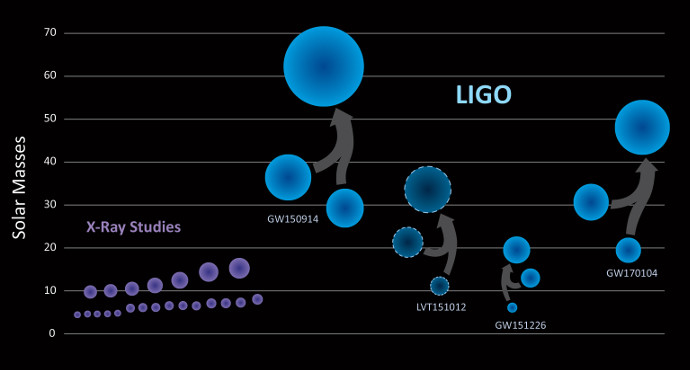
Archana Pai works in gravitational wave physics and astronomy. The main research focus is developing detection algorithms for the modeled as well as unmodeled astrophysical gravitational wave sources, probing astrophysical parameters using interferometric detectors such as LIGO, Virgo etc as well as from joint observation of events in gravitational wave and electromagnetic window and developing optimal multi-detector techniques for compact binaries with neutron stars and black holes. The group is a member of LIGO Scientific Collaboration and is currently involved in the intermediate mass black hole binary search with the joint observational data. For details on the list of compact binary merger events observed by the LIGO-Virgo network can be found here.
Keywords: Gravitational Wave Astrophysics, Signal Processing, Testing General Relativity
Vikram Rentala is a particle-astrophysicist interested in understanding the nature of the mysterious dark matter that appears to constitute most of the mass of the universe. His main interests are 1) Exploring cosmological and astrophysical signatures of dark matter self-interactions, 2) Looking for signals of dark matter annihilations and decays in cosmic rays, 3) Understanding the impact of astrophysical uncertainties on direct detection searches for dark matter, and 4) Searching for dark matter at particle colliders (such as at the Large Hadron Collider at CERN). More details about his research can be found here.
Keywords: Dark Matter, cosmology, particle astrophysics
Shankaranarayanan's fields of interest are gravitational physics and quantum field theory, with emphasis on early-universe, cosmology and black-holes. His work has focused on (i) understanding the origin of micro-Gauss strength magnetic fields in the galaxies and clusters of galaxies, (ii) Using cosmic microwave background as a tool to probe new physics near the scale of inflation and (iii) Quantum entanglement as a source of black-hole entropy. (iv) Fluid-gravity correspondence. More about his work can be found here.
Keywords: Early Universe Cosmology, blackhole physics, modified gravity, magnetogenesis
Condensed Matter Experiments
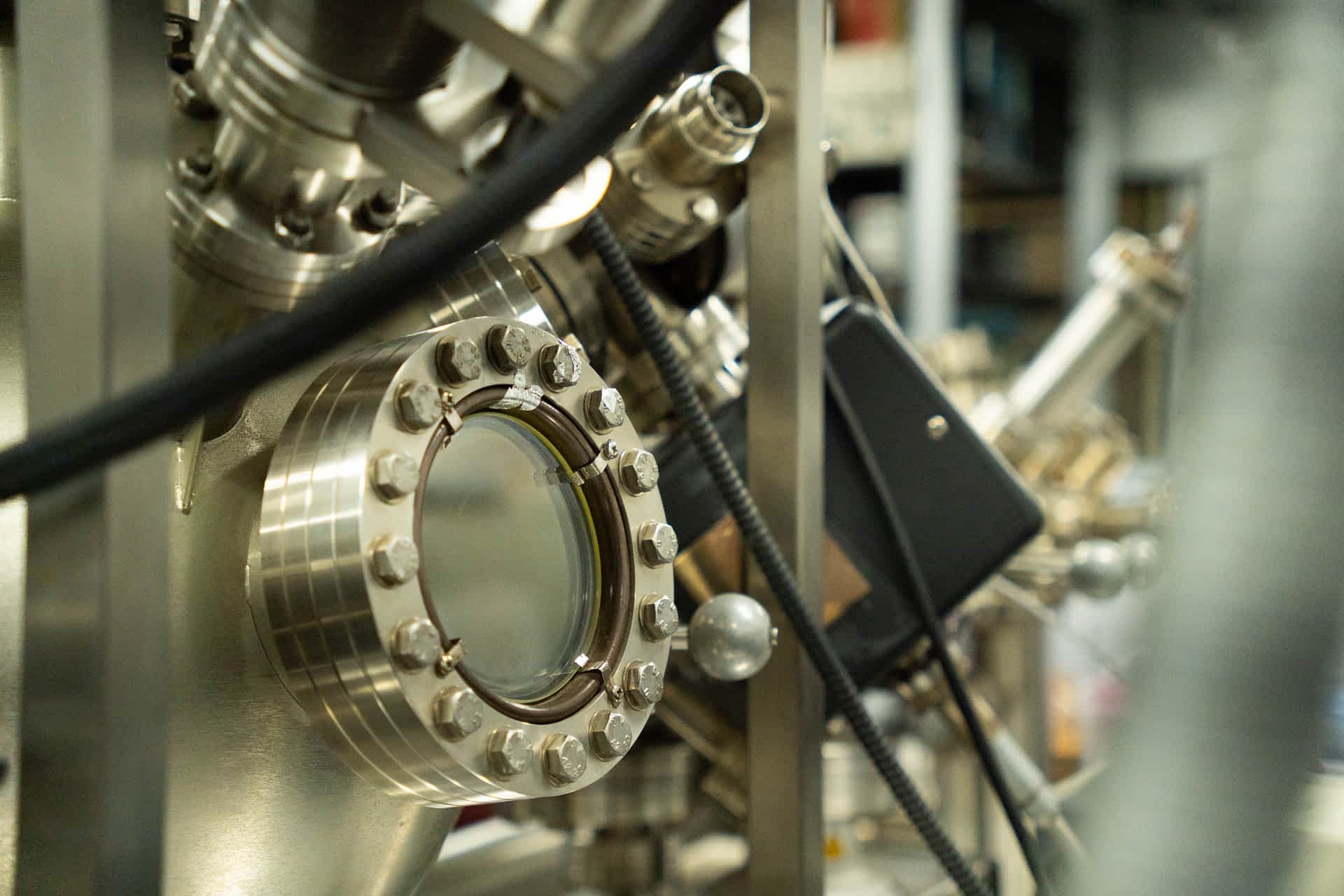
The condensed matter experiment group, often tends to be the largest in Physics departments throughout the world for the sheer variety of material systems. The group in IITBombay is no exception, contributing approximately a third of the faculty strength of the department.
Over the years several experimental laboratories have been built up by this group. These include Pulsed Laser and Chemical vapour deposition (PLD/CVD) and Langmuir Blodgett systems for growth of magnetic materials like Ferrites, oxide/Nitride semiconductors and organic semiconductors. Recently the department has also been working on a High Pressure High temperature furnace system to produce metallic compounds with the metal ion in oxidation states not commonly found. Collaborative work in Multilayer thinfilms, Heuslar alloys with spintronic applications has been in progress for a few years now. Understanding spin and electronic structure at the microscopic level and their correlations is a core area of condensed matter physics. Solid state NMR based work on spin chain compounds, intermetallics that exhibit spin glass and spin liquid like behaviour have addressed some of the fundamental physics of spin-spin interaction and various phases predicted by model spin hamiltonians.
A Microwave Plasma CVD growth developed in the department has been used for making artificial diamond films for radiation-hard high energy particle detector applications. The group working on nanomaterials have successfully developed sensors and chemical filters based on Graphene.
The department has set up critical instruments necessary to understand the structures of materials. Currently we operate facilities like AFM, High resolution Xray diffraction, Surface chemical Analyser (ESCA). Recently the department has also started operating a class 10,000 cleanroom with basic semiconductor and thinfilm device processing capabilities like photolithography, rapid thermal annealing, chip scribing and ultrasonic wire bonding. Many of these are common facilties open to all.
A cryogenic facility and liquid Helium has become a critical need over the years to maintain NMR, superconducting magnets, SQUID magnetometers, optical and transport measurement systems. Currently the department has inhouse capability for magneto-transport and SQUID magnetometry down to 300 mK (Helium-3 based wet systems). These are in regular operation and are used for experimental work with heterostructures, nanowires, magnetic and superconducting materials.

Optics and Photonics
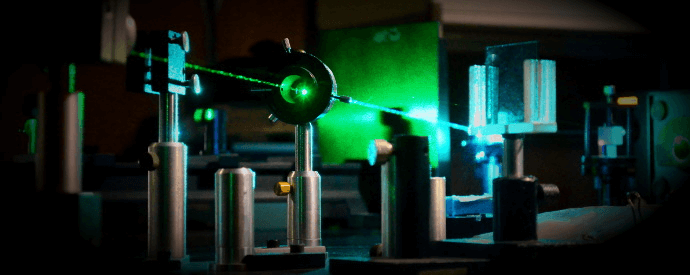
Welcome to the home page of the Photonics and Spectroscopy Group of Physics Department at IIT Bombay. Our mission is to explore light-matter interactions in various types of physical systems to understand essential fundamental concepts and to develop novel technologies for real-world applications. Our aim is to foster environment of learning, innovation and interdisciplinary research in the upcoming field of photonics. We strive to provide a stimulating as well as vibrant atmosphere for undergraduate and postgraduate students through research and teaching.
We have a long tradition of offering several undergraduate theory as well as laboratory courses in photonics and spectroscopy like optics, basic and advanced photonics, light-matter interaction, optics at nanoscale and introduction to atomic and molecular physics. Our research is adventurous as well as curiosity-driven but relevant to the wider scientific community. Some of the cutting-edge research areas, which we have been trying to explore are nonlinear optics, ultrafast phenomena, molecular spectroscopy, nano-optics and plasmonics, organic LEDs and devices. Our labs and central facilities available at IIT Bombay are well-equipped to undertake frontline research in any of these topics. You can find out more about our research by browsing our department pages.
Quantum Information Theory
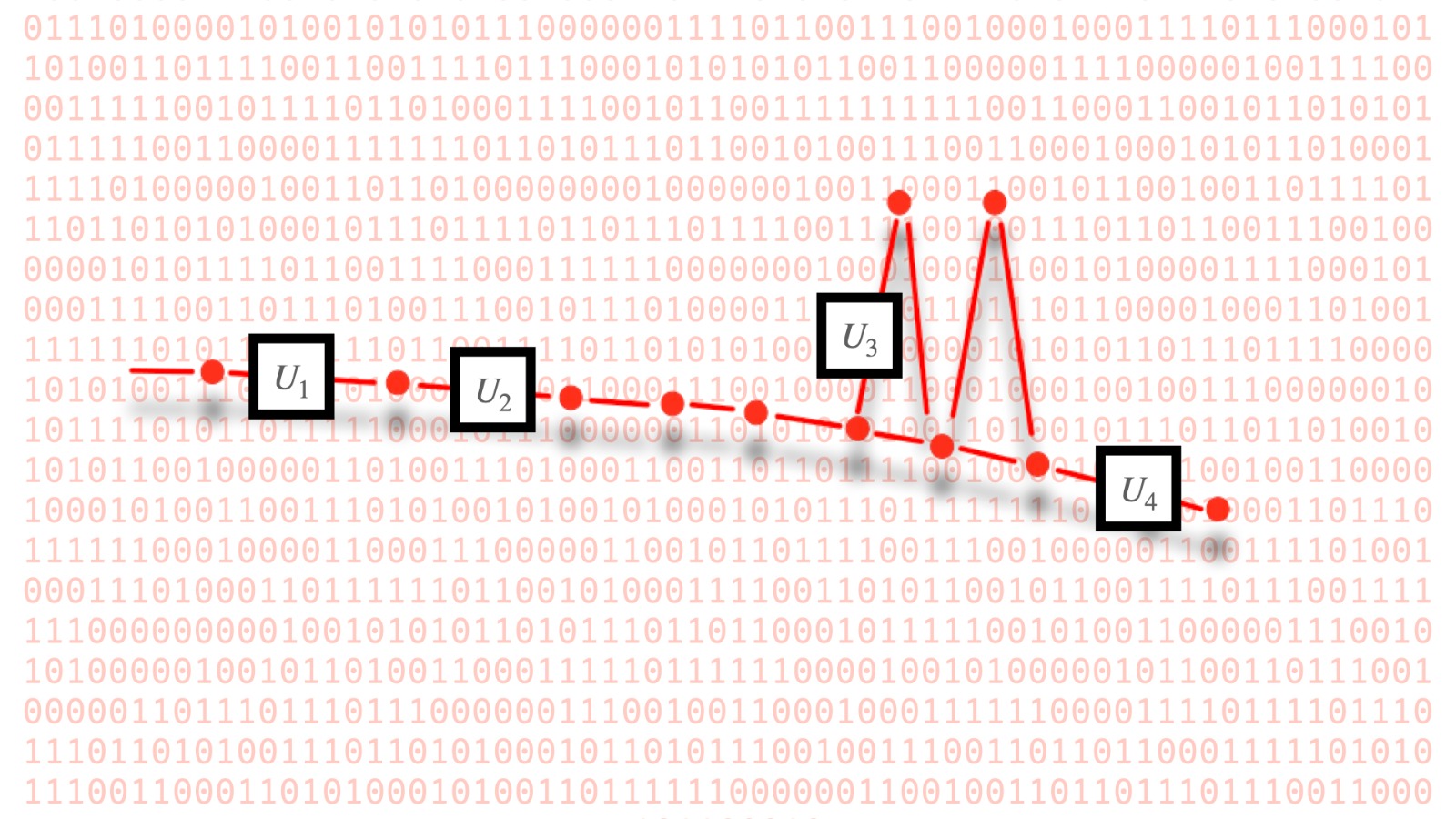
Physics often informs us about how to think about the world around us through the lens of the fundamental laws of the universe. Such laws can be thought of as the “hardware rules” of the universe. Besides this hardware perspective, the universe can also be viewed in terms of the “software” it runs. Just like a program accepts an input and returns an output, one can think of physical systems such as black holes as accepting an input of matter and returning an output of Hawking radiation. Quantum information theory studies the universe in terms of such a software perspective, analysing the information theoretic content of physical processes.
This combined hardware and software approach is the crux of our group's work here at IIT Bombay. We study various physical problems, ranging from the physics of quantum technologies, hybrid light-matter interacting systems and communication over quantum networks by taking into account both the hardware and software rules of the universe we live in.
Soft Matter, Biophysics and Nonlinear Dynamics
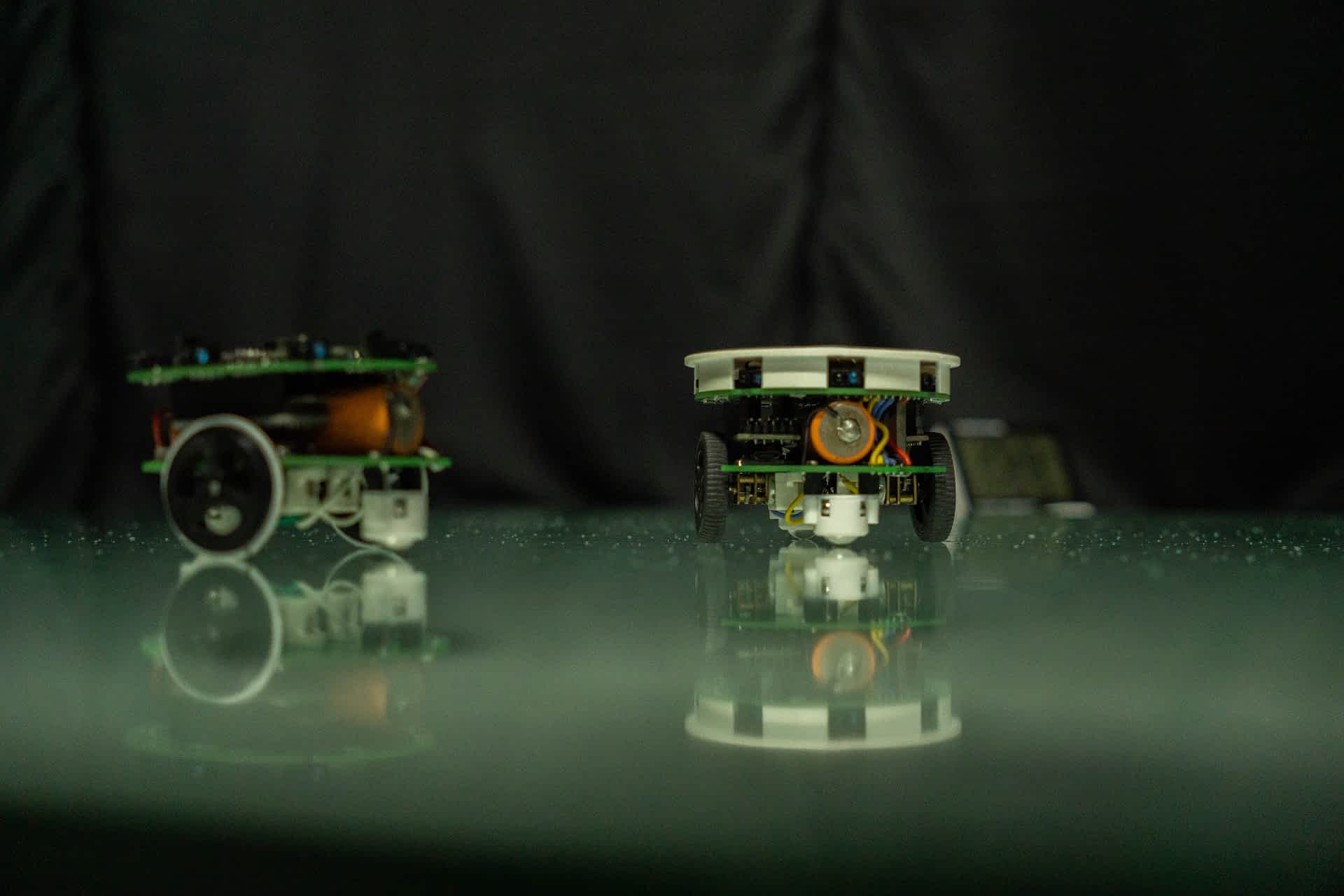
In the late 19th century, the seminal work of Boltzmann introduced statistical approach in physics to develop a theory for macroscopic thermal systems in equilibrium. Much interest in the past century focussed on developing the theory of phase transitions seen in variety of physical systems. Beyond classic studies of magnets and fluids, lot of other exotic systems like polymers, colloids, liquid crystals (popularly known as soft matter) got active theoretical attention. In parallel the study of random (stochastic) processes in time, starting with classic diffusion, got extended over the years to include variety of non-equilibirum processes, as they do not obey Boltzmann statistics. These include dynamics of granular matter, driven diffusion, vehicular traffic, and most active biological processes spanning from cellular to population levels. Apart from that another interesting development of the past century was study of non-linear phenomena. Members of this subgroup are actively involved in research on areas like soft matter, biophysics, and non-linear dynamics.
Focus areas include
Soft Matter - Polymer Physics; Granular Matter; Dynamics of Driven poly-crystals
Biological Physics - Active Matter; Gene Regulation and Gene Expression; Epigenetics and Chromatin Organisation; Dynamics of cytoskeletal filaments; Cellular traffic; Mechanics of cell division in bacteria and eukaryotes; Shape transformations via membrane protein interaction; Modeling in developmental biology
Nonlinear Dynamics - Elctrical circuits; Electrochemical systems; Stochastic delay differential equations
Theoretical Condensed Matter Physics
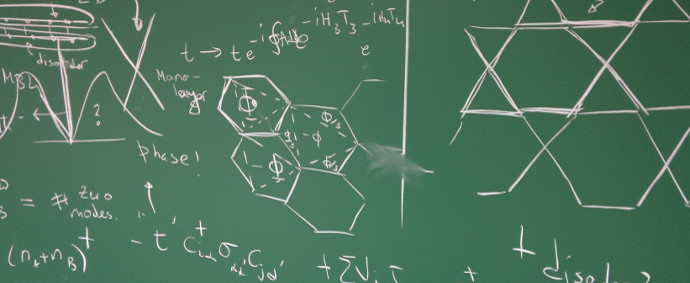
The overarching theme of condensed matter physics is the study of how new phenomena emerge from the collective behavior of a large collection of particles. Rooted in the philosophy of "more is different", our field explores how microscopic interactions between individual components lead to fundamentally distinct laws that govern the system at the macroscopic level — laws that cannot be deduced from the physics of individual components alone. The research in theoretical condensed matter physics at IIT Bombay revolves around a synergistic combination of quantum physics, symmetries, topology, strong correlations, disorder, dynamics, and novel materials. In our endeavor to understand and predict emergent phenomena that govern macroscopic quantum systems relevant to experiments, we focus on two broad lines of research. The first approach relies on simple models that capture the essential physics of a problem, highlighting its universal aspects and providing the theoretical foundations for novel phenomena. The second approach employs first-principles methodologies to bridge theoretical predictions with their realization in condensed matter platforms such as solid-state materials and artificial quantum systems, emphasizing the discovery and design of exotic physical properties with potential technological applications.

Theoretical High Energy Physics
Elementary Particle physics and physics beyond the Standard Model
The Standard Model of elementary particles is an extremely successful theory of strong, weak and electromagnetic forces. The discovery of a Higgs-like boson is an important step towards a final confirmation of the Standard Model. Yet many open questions remain unanswered.
Origin of the Higgs boson: The Higgs boson plays an important role in the Standard Model and provides a universal mechanism for particle masses. Theoretically it is required as the remnant of electroweak symmetry breaking (EWSB) that separates the weak forces from electromagnetism. Is the 125 GeV boson discovered at the LHC really the Higgs boson of the Standard Model? If so, why is its mass much smaller than the naively expected theoretical value?
Top quark physics: Is there any connection of EWSB to the mass of the top quark? We have been exploring Higgs and Top quark physics in beyond Standard Model (bSM) models. We have especially been exploring collider signatures of new physics contributions to Higgs and top quark observables, through polarization and jet substructure studies both at the Large Hadron Collider (LHC) and the proposed International Linear Collider (ILC).
Understanding the proton spin: We know that the proton has spin 1/2. How is this built up from the intrinsic spin of quarks and gluons and their orbital angular momentum? In a high energy collider experiment, if one polarizes one or both beams either longitudinally or in the transverse direction, what new information can one obtain about the structure of the nucleons and their interaction?
Neutrino Physics: What makes the neutrino masses a trillion times smaller than the EWSB scale? What new physics underlies their individual masses and mixings? Is one or more neutrino its own antiparticle? What is the mass hierarchy of the neutrinos? Is there any CP violation in the neutrino sector?
Flavour Physics: Both quarks and the leptons appear with identical gauge couplings across three generations, this is associated with a "flavour'' identity that is preserved by the strong and electromagnetic interactions. This flavour identity is violated in charge- current weak interactions and it also leads to a mixing between generations. What explains the masses and mixings of the fermions in the Standard Model? What are the CP violating parameters in their interactions and what connection does this have to the baryon asymmetry of the universe?
Unified Theories
The explanation for some of the theoretical issues with elementary particles can be found by invoking new symmetry principles. Historically, this has been an extremely fruitful direction. In addition, we would like a theory of fundamental particles that includes quantum gravity.
Supersymmetric gauge theories: Supersymmetry is a theoretically appealing quantum symmetry, that relates bosons and fermions. The problems faced by the standard Higgs can be reduced if nature is supersymmetric at the weak scale. Additionally, if we assume that the unequal participation of left handed and right handed particles in the weak force is only a low energy manifestation, we can construct left-right symmetric extended supersymmetric models. Can such extensions explain the origin of the matter vs. anti- matter asymmetry of the universe and the extremely low neutrino mass? Does one necessarily require a very high scale and a large gauge group like SO(10) for unification?
Topological Quantum Field Theories and knot theory: During the last three decades, we have seen topological quantum field theories playing a crucial role in providing a natural framework for the study of geometry and topology of three and four-dimensional manifolds. One of the challenging open problem is the classification of knots and links in three-manifolds. We have made significant progress on knot polynomials using Chern- Simons topological field theory and have distinguished many inequivalent knots.
AdS-CFT correspondence: The AdS-CFT correspondence or duality (also called “gauge- gravity correspondence”) is a powerful tool which enables computations of the strong coupling regime of gauge field theory using the weak-coupling limit of gravity or String Theory. Interestingly, Gopakumar-Vafa conjectured a similar correspondence between Chern-Simons field theory and topological string theory. This led to a flurry of activities resulting in connection between integer coefficients in the knot polynomials to the counting of stable states in string theory called BPS states. We have been working on string theory-gauge theory dualities to understand counting of BPS states as well as to obtain the transport properties like ratio of shear viscosity to entropy density as experimentally observed in the quark gluon plasma.
Astroparticle physics and early universe cosmology
Matter-antimatter asymmetry: Why is the mass of baryons in the universe today dominated by protons and neutrons, but not by their anti-particles? All the known forces preserve baryon number (B) and separately lepton number (L) at low energies. Yet theoretical arguments based on quantum “anomalies” show that only the combined number B-L should be preserved at high energies. However, violation of baryon number alone proves to be insufficient to generate a matter-antimatter asymmetry. Invoking extensions of Standard Model in the hot Big Bang Universe we have advanced explanations for the observed matter-anti-matter asymmetry. Specifically, topological defects occurring in extended gauge models, like cosmic strings and domain walls are shown to play a crucial role in these scenarios.
Dark matter: The evidence for dark matter is overwhelming from cosmology and astrophysics, yet we are clueless as to the particle nature of dark matter. What particle or particles are responsible for forming the dark matter which constitutes 20% of the energy budget of the universe? Do our extended models contain possible candidates that can be tested in the near future?
Inflationary paradigm: The length scales as well the overall age of the Universe are difficult to understand from microscopic physics. Naturally speaking, a Universe starting from a Big Bang dominated by quantum gravity, should have lived only for 10^{-44} second. Yet it has lived for 14 billion years, or 10^{+17} seconds! A generic explanation lies in the presence of a scalar field excitation (called an inflaton) with special properties. This scalar field drives an early phase of exponential expansion of the universe which explains the remarkable homogeneity and isotropy observed on large scales. What imprints do the properties of the inflaton leave on the Cosmic Microwave Background Radiation being observed with micro-precision by experiments like the Planck satellite?

Research
October 24, 2023
Engineering Dept Develops New Solar Tech
A team of professors and graduate students have patented a new material that increases solar panel efficiency by 40%.

Research
October 24, 2023
Engineering Dept Develops New Solar Tech
A team of professors and graduate students have patented a new material that increases solar panel efficiency by 40%.